
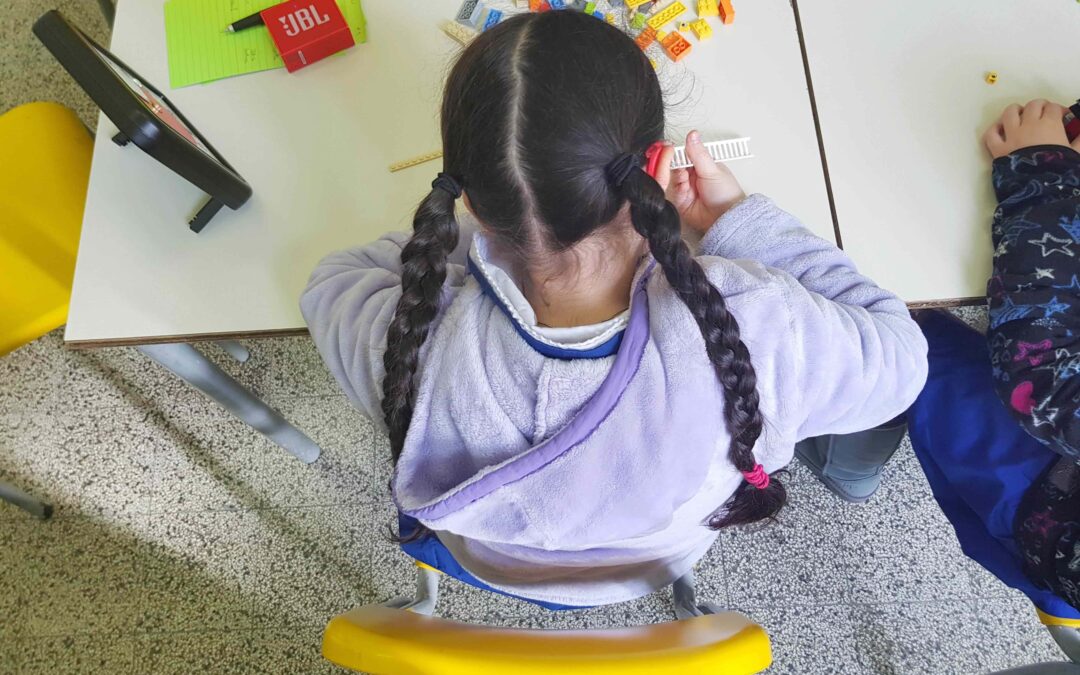
Does LSP work with kids?
I guess the implied meaning of this question is, how do kids behave when you ask them to play with a purpose?
Truth is, children always play with a purpose, sometimes that purpose is visible, sometimes is not, but it is always there. In fact, the instinct of playing with purpose is not even human, it is animal. Johan Huizinga, in his book HOMO LUDENS, reflects that play is older than human culture and animals have not waited for man to teach them their playing.
Children – through play – learn vital, social and emotional skills, how to use their body and abilities to explore the environment, how to get on with others, how to be empathic and to manage feelings, how to be a part of something bigger than themselves.
In the process of getting adults, we gradually loose this confidence in the power of play, we learn to package interactions into a formal and structured setting that limits vibrations, creativity and discoveries. This fundamental difference is obvious if you compare their reaction upon entering a room with LEGO bricks: adults will wait for permission before touching the bricks, while kids will start building something up without the slightest hesitation.
If kids have no issues touching the bricks and playing with purpose, I kept wondering how easy it would be to engage them into a conversation whose purpose was not decided by them.
To find out, I tried LSP with children in different settings such as family circles, large festivals or weekend coding classes. The most powerful experience came on a Monday morning when I entered an elementary school in Florence to face a group of 10y old kids and their teachers. After the summer break, these kids will transition to the Middle School level, move to a new school building, with new teachers, new schoolmates, heavier study-load. At that age, that’s kind of scary.
That is why with the teacher we decided to explore their “fear of changing school”.
Given they were 24 in total, we split the class into 3 sessions – 1 hour each.
This gave some room for improvement, as I observed their reactions to the questions and tried little tweaks here and there.
The last iteration was the best, when I finally figured out how to gain 100% complicity.
I basically told them I had come for help. I have two nephews – I said – same age as you are. My nephews told me they feel a bit scared about moving to Middle School. As I personally forgot what it feels like, I need you today to help me create a story that I can tell to my nephews. Maybe we can build that story with the bricks, so that I can take pictures and make a nice book for my nephews to read. Would you help me, please?
Complicity was incredible. By moving the center of attention to a child other than themselves, I managed to listen to incredible depth in their stories, what could be scary to someone, and what ideas they could imagine to overcome those fear.
My learning is that – with kids – you need to be extra careful on how to frame the whole exercise to make it relevant for them, or they will not really commit. Kids have no problem at all to go around the question, should you offer the wrong one. But in return for sensitive planning and framing, kids will always offer you a rewarding conversation.
Carlo,
Thank you for your posting. Congratulations on your workshop’s achievements. Your entry into their group was well crafted and I am not surprised that it led to a successful outcome.
Your topic of working with young people, especially regarding transitions through critical points of the education system, is of particular interest to me. In addition to your workshop’s transition point, I am also interested in youth transitioning from rural setting to urban settings and Indigenous Youth moving from community schools to larger non-Indigenous schools.
I recently was part of a team of group of facilitators that was responsible for facilitating public consultation regarding a comprehensive review that our gov’t is undertaking of our secondary (k-12) school system. Of that group, I was the only facilitator trained in the LSP methodology and was responsible for designing and leading the student section.
I worked with 120 high school students from across our province (Manitoba). The students were from over 30 different school districts and the vast majority did not know any of the other students. They were chaperoned by 45 teachers.
Students were divided into groups of 7-8 and were mixed to ensure a balance of genders and rural/urban composition. Of note, I congregated teachers to a separate section of the room so that the youth participants were free of adult/teacher influence (teachers were, however, also given bricks and invited to join in and record their responses to the questions).
While a broader topic and older age group, the results of the workshop were not unlike your own. The process was highly successful at taking highly disparate groups united only by age and moving them towards highly motivated, high energy teams by the end of the day. In fact, I had to modify my original plan because it was clear that the participants were past individual and pair work and anxious to work as a team with their table mates.
While I have not been an LSP facilitator for very long, I can say that the work of these young people was extraordinary and their final works outclassed any of the adult teams I have worked with to this point in time.
In the end, the Review Commissioners were a bit overwhelmed by the power of the Lego®Serious Play® process and the insightful and powerful feedback provided by the students.:)
I look forward to hearing more about your work and would be delighted to stay in touch with you on this subject.
Darrell